

Pasta is the most forgiving thing you can cook and the easiest to quietly ruin. Nothing dramatic happens when it goes wrong — no smoke alarm, no split sauce — you simply get a plate that tastes flat, or clumps together, or wears its sauce like a coat instead of holding it. Because the dish is so plain, the small things carry all the weight: how much water you used, when you salted it, whether you tasted a piece two minutes before the timer went off, whether the bowl was warm.
Almost everything below costs nothing. These are habits rather than techniques, and once they settle in you stop thinking about them. Here are the mistakes I see most often on home stoves — and what to do instead.
Water: Too Little, Too Cool
A cramped pot is the root of a whole family of problems. When pasta is crowded, the water temperature drops sharply when you add it, the pieces lean on each other and stick, and the starch has nowhere to go but back onto the pasta, leaving it gluey. Pasta needs room to move.
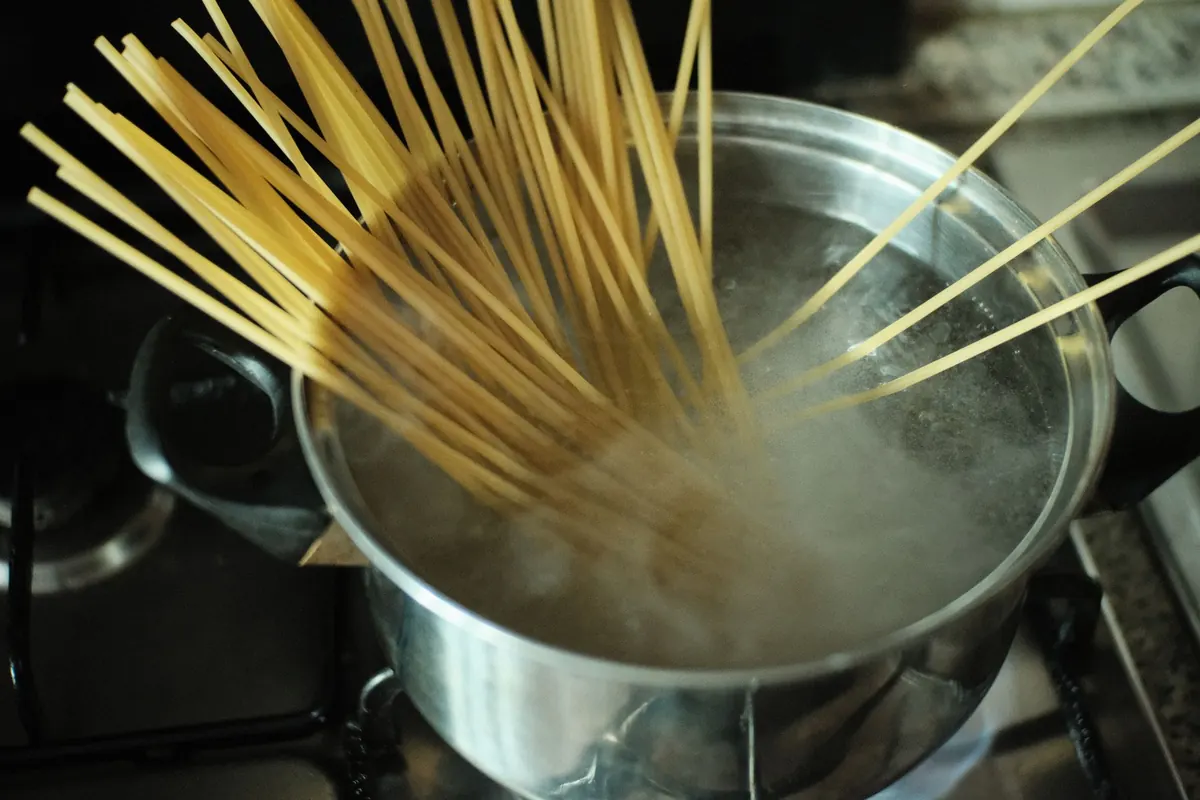
As a working rule, use about a litre of water for every 100 g of pasta, and choose a wide pot over a tall narrow one — more surface area means the water comes back to the boil faster. Bring it to a hard, rolling boil before anything goes in. Then stir for the first minute; that is when sticking happens, and thirty seconds of attention solves it.
If the water goes quiet the moment the pasta lands and stays that way, you are not cooking pasta, you are soaking it. Clamp the lid on for a minute to bring it back up, then take it off again so the water can move.
Salt and Oil: Two Habits Worth Breaking
Under-salted water is the most common reason a plate of pasta tastes dull even when the sauce is good. Season the water once it is boiling, and season it properly — it should taste like a light broth, not like the sea and certainly not like nothing. You can taste as you go, which is exactly why adding salt after the boil beats adding it to cold water.
Then there is the oil. A splash of oil in the pot does not stop pasta from sticking: it floats on the surface, and whatever does cling to the pasta makes the sauce slide straight off. Stir instead. Oil belongs in the pan, if it belongs anywhere.
The Sauce Never Meets the Pan
Sauce spooned over a mound of drained pasta is a topping, not a dish. The last minute of cooking is where pasta and sauce actually combine, and skipping it is why restaurant pasta tastes different from home pasta even when the ingredients are identical.
The method is short. While the pasta boils, warm the sauce in a wide skillet or sauté pan over medium heat. Before draining, scoop out a mug of the cooking water. Drain the pasta a minute or two early, tip it straight into the skillet, add a small splash of that water and toss for thirty to sixty seconds, until the sauce turns glossy and clings to every piece. The starch in the water binds with the fat in the sauce and turns two separate things into one.
Two related errors. First, a sauce that is too thick to coat: loosen it with pasta water, not with more oil or cream. Second, too much sauce — it should cling, not pool in the bottom of the bowl. If you need a spoon to deal with the leftovers at the bottom, the balance is off.
Timing: The Box Is a Suggestion
Those cooking times on the packet assume a particular brand, a particular thickness, a gas flame and sea level. Your kitchen is not that kitchen. Set a timer for two minutes less than the stated time and start tasting then. That single habit prevents most overcooked pasta.
What al dente actually means
Not crunchy, and not simply "firm". Al dente pasta is tender through the outside with a slight resistance at the centre — no chalky white core, but a bit of bite. If you are finishing the pasta in the pan with the sauce, pull it out a minute earlier still, because it keeps cooking as you toss it.
And do not walk away. Pasta left in hot water off the heat continues to soften; the window between right and mushy is short and it closes quietly.
Draining: Not a Finish Line
What happens in the thirty seconds after the colander matters as much as the eight minutes before it.
- Do not rinse. Rinsing washes away the surface starch that helps sauce adhere. The only reasonable exception is pasta destined for a cold salad.
- Do not let it sit. Pasta parked in a colander keeps steaming, clumps and turns starchy. Have the sauce hot and the bowls ready before you drain.
- Do not drain it bone dry. A little moisture left on the pasta helps the sauce loosen and coat.
- Do keep the water. That mug of cloudy cooking water is the most useful thing in the kitchen for the next five minutes.
Serving: Warm Bowls, Hot Sauce, Sensible Portions
Pasta cools fast, and a cold bowl speeds the process up. Swill your serving bowls with hot water and dry them while the pasta finishes — a small ritual with an outsized effect on the first forkful. The sauce should already be hot and waiting; pasta waiting for sauce is pasta going cold.
Portion honestly. Around 80 to 100 g of dry pasta per person is a generous first course in the Italian style, and it leaves room for what comes next. Overfilled bowls are hard to toss, cool down quickly and end up heavy.
Finally, taste before you grate. A finely grated hard cheese is wonderful on many sauces, but a heavy hand on a delicate seafood or light vegetable dressing buries the thing you spent time cooking.
A Short Checklist for Tonight
- Fill a wide pot with about a litre of water per 100 g of pasta and bring it to a hard boil.
- Salt generously once it boils — it should taste seasoned, not salty.
- No oil in the water. Add the pasta, stir for the first minute, keep the water moving.
- Set the timer two minutes under the packet time and taste when it rings.
- Warm the sauce in a pan and reserve a mug of cooking water before draining.
- Drain early, finish in the pan with a splash of that water, and toss until glossy.
- Serve in warm bowls, immediately, to people who are already at the table.
None of this adds time to your evening. It removes a few small, repeated errors — and that is usually the whole difference between a plate of pasta and a good one.
Photo: Gianpiero Ferraro / Pexels
Related posts
More stories you’ll love reading