

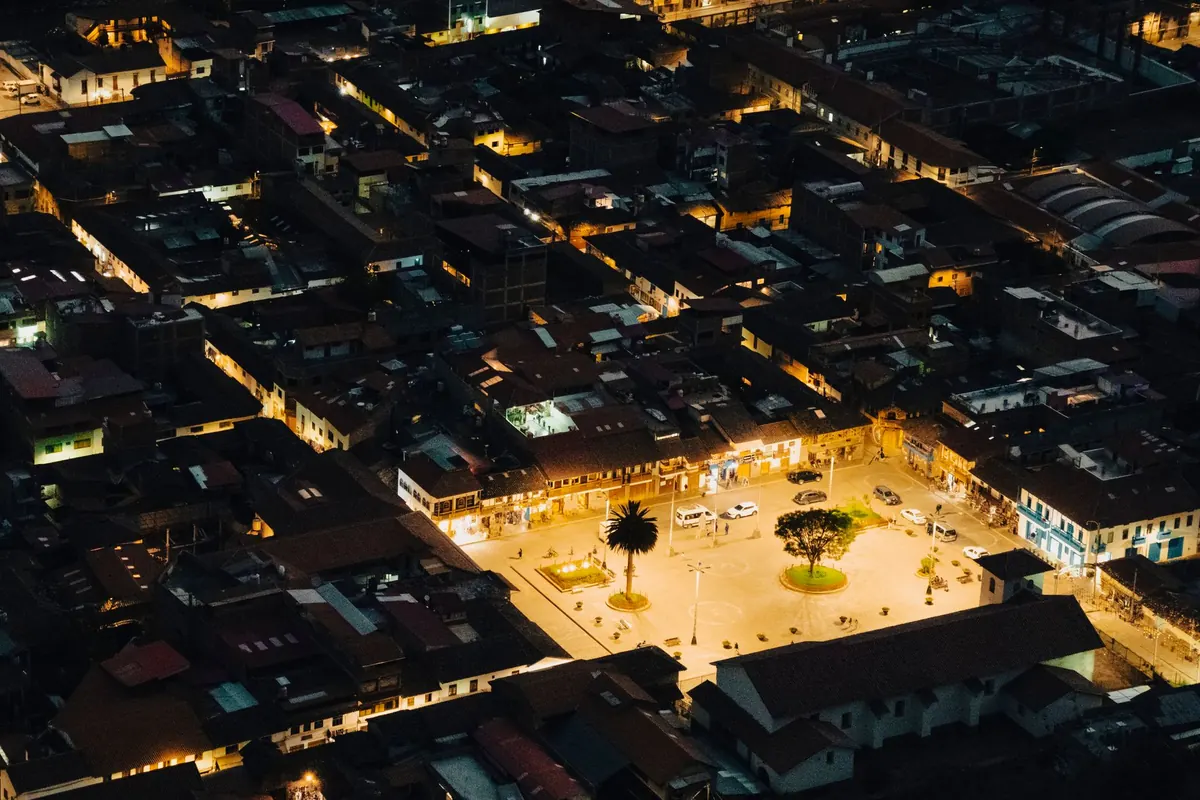
At half past six on a Thursday in June, the same street in Bologna can look like two different cities. At four in the afternoon it belongs to delivery bikes and shopkeepers hosing down the pavement. By seven it is a slow river of people — grandparents, teenagers, couples with a pram — all moving in the same direction for no reason other than to be out. An hour later the crowd drains into the bars and the sound changes: glasses, low laughter, a bowl of taralli going round.
Those are the two rituals. One is a walk, the other is a drink with something to nibble, and both are far more social than they look from the outside. Mixing them up is one of the easiest mistakes a visitor can make: turning up to a passeggiata in heels expecting canapés, or treating an aperitivo as a quick warm-up before the real evening starts. Here is what each one is for, when it happens, and how to slip in without feeling like an outsider.
The passeggiata is not a walk to anywhere
The word means "the stroll", but distance has nothing to do with it. A passeggiata follows a shape: out along the main street or the seafront, a turn at the piazza, and back again. In a hill town it might be the length of the corso, twice. In Rimini or Naples it is the lungomare. In a village of four hundred people it is three laps of the same square, and everyone knows exactly whose turn it is to stop and talk.
Nobody is training for anything. The pace is deliberately slow — slow enough to stop mid-street for a conversation, slow enough for a child on a scooter to keep up. This is the part visitors underestimate: the passeggiata is not exercise with a view, it is a social appointment that happens to involve walking.
What it looks like from the inside
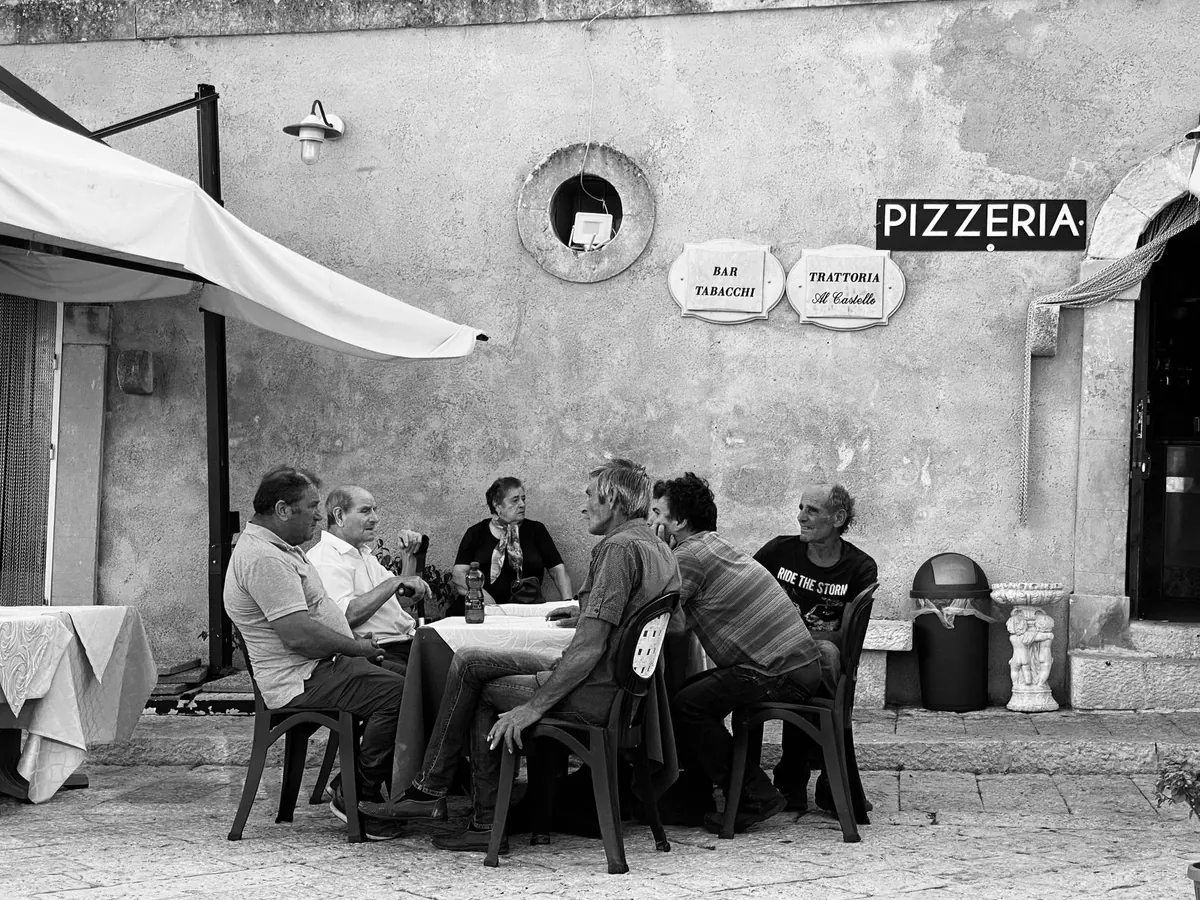
Between roughly six and eight in the evening in summer, earlier and shorter in winter, the street fills. Older men in pressed shirts occupy the bench outside the bar and hold court. Teenagers circle in loose groups, pretending not to look at each other. Someone has clearly spent twenty minutes on their hair for a walk of two hundred metres, and that is the correct amount of effort.
What you are expected to do is almost nothing: walk, greet, be present. No ticket, no reservation, no obligation to spend a cent. Buy a gelato halfway round and you have participated correctly. Sit on a bench and watch and you have also participated correctly.
Aperitivo is a time slot, not a drink
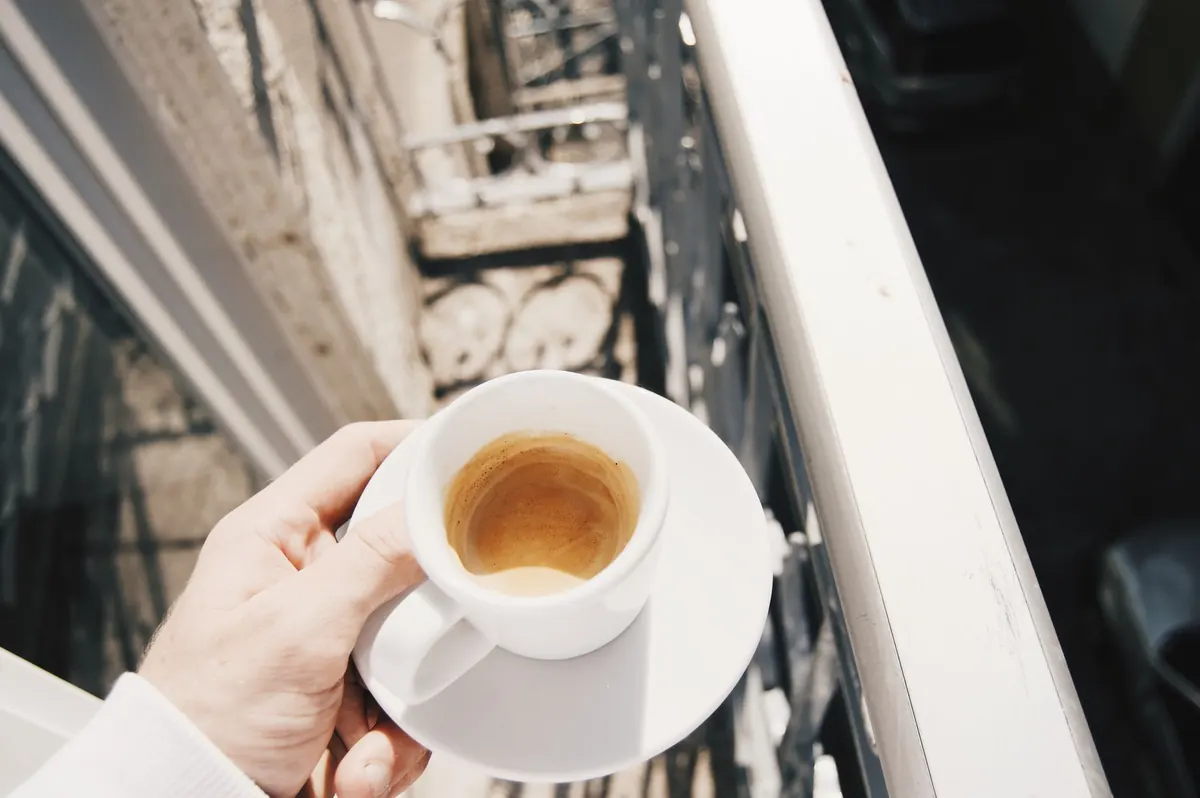
Aperitivo is the Italian pre-dinner hour, and the drink exists to open the appetite rather than to finish the evening. The format is simple. You order something, and it arrives with food: a dish of olives, crisps, taralli, a few squares of focaccia, a couple of small tramezzini. In bigger cities and in bars that lean towards a younger crowd, the snacks become a buffet, and then it may be called an apericena — enough food that a sensible person could skip dinner, and plenty of people do.
The drinks are usually bitter and light: a spritz, a Negroni, a glass of prosecco, a vermouth. Non-drinkers are well looked after — Crodino, Sanbittèr, a fresh orange juice — and nobody raises an eyebrow if you order one. What matters is that you sit or stand with a glass in front of you for an hour, which is the actual product being sold.
The shape of an Italian evening
Hours shift with the season and the region, so treat this as a rough map rather than a timetable. Watch what locals are doing on your first evening and adjust.
- Late afternoon, around 5.30 to 6.30: the passeggiata at its most local, especially in small towns, hill villages and along the seafront.
- 6.30 to 8.30: aperitivo. In Milan and Turin this is close to a religion on a Friday; in the south in July it may not get going until eight.
- 8.00 onwards: a second, shorter passeggiata in summer, when the heat finally breaks and families come out before dinner.
- Sunday: the classic passeggiata, often after Mass, often in better clothes, often with an ice cream in hand.
What each ritual expects from you
At the passeggiata
- Greet people. A quiet "buonasera" to a shopkeeper or a neighbour on a bench goes a long way.
- Dress as if it matters, because it does. Clean shoes, a pressed shirt, a proper jacket. Italians call it la bella figura; it is not vanity, it is manners.
- Keep moving with the flow. Stopping dead in the middle of the street to check a map is the one thing that marks you out.
- Leave the phone in your pocket. The whole point is the people in front of you.
At the aperitivo
- Order a drink. That is the entry fee. Sipping a glass of water at a table for two hours will not make you popular.
- Expect to pay more for a table outside than for a stool at the bar. This is normal, not a tourist surcharge.
- Treat the snacks as snacks unless the bar has laid out a proper buffet and priced it accordingly.
- Do not nurse one drink for three hours while eating your way through the olives. Order a second, or move on.
Joining in without feeling awkward
- Find the street first. Ask at your hotel or the nearest bar: which is the street where people walk in the evening? The answer is usually the corso, the piazza, or the seafront.
- Watch for ten minutes. Note the pace, the direction, the shoes. Then join it.
- Go empty-handed. No shopping bags, no camera around your neck, no backpack if you can leave it behind.
- Learn three phrases. Buonasera, un spritz per favore, il conto per favore. That is genuinely enough.
- Stand at the counter if the locals are standing. At the bar you often pay less and you see more.
- Leave when it ends. Both rituals have a natural end. Slipping away at the right moment is part of the etiquette.
If you only have one evening
Choose by place. A small town, a hill village or anywhere on the coast is passeggiata country — a bar crawl there will feel thin. A big city on a wet Tuesday is aperitivo country, and the walk can wait.
If you are in Rome, Florence, Bologna or Turin in late spring, do both. Walk from 6.30 to 7.15 with the crowd, then pick a bar where people are standing outside rather than sitting in, and order a spritz. You will have spent about ninety minutes and understood more about how the city works than a day of sightseeing will teach you.
A simple plan for your first evening
Arrive at the main piazza around a quarter to seven. Walk the corso once in each direction at the pace of the people around you, buy a gelato if the queue is short, and notice where the crowd thickens. When the walk starts to thin out, follow the first group that turns into a bar. Order at the counter, take whatever arrives with the drink, and stay for one round only.
Two sensible notes. If you are driving, skip the alcohol entirely — Italy's drink-driving limits are strict and enforced, and the non-alcoholic options are good. And if you have allergies or dietary needs, say so before you eat from a buffet, since ingredient labels are rarely on display.
Photo: Marcelo Mora / Pexels
Related posts
More stories you’ll love reading