

Italy rewards travelers who slow down, but a seven-day trip can still cover several cities if you let the trains do the work. The key is a realistic route, booked early, with luggage you can carry and enough slack to enjoy the journey. This plan uses Rome, Florence, Bologna and Venice as a practical spine, with local transport for the last mile.
Start With Three Cities, Not Seven
Italy’s rail network is excellent, but a seven-day trip has a limit. Trying to add Milan, Naples and the Cinque Terre to the same week usually means spending half the holiday watching stations go by. Choose a line with short hops and a clear direction.
A comfortable shape is Rome, Florence, Bologna and Venice. You get two nights in Rome, two in Florence, one in Bologna and one in Venice before departing on day seven. If you want more breathing room, drop Bologna and add the night to Florence or Venice. The point is not to collect cities; it is to leave each one with something you wish you had seen.
Book the Skeleton First
Treat the trip like a small project. Book the fixed pieces first, then fill in the pleasant details. High-speed trains between Rome, Florence, Bologna and Venice are frequent, but popular departures do fill up, especially on weekends and around public holidays.
- Choose your arrival and departure points. Fly into Rome and out of Venice, or the reverse, to avoid backtracking. Check that the airport train or bus connects sensibly to your first hotel.
- Book the long train legs. Compare Trenitalia and Italo for high-speed services. Both sell tickets through their own apps and websites. Look at departure times, stations and total travel time rather than only the fastest option.
- Pick specific departures with a buffer. A 9 a.m. train sounds efficient until your hotel breakfast runs late. Mid-morning departures are gentler, and they leave room for a wrong platform or a coffee stop.
- Book accommodation near the station or a metro stop. In Rome, Termini or a metro-connected neighborhood saves taxi rides. In Florence, Santa Maria Novella is practical. In Bologna, the station area is close to the center. In Venice, choose carefully: Santa Lucia is convenient, but some addresses still involve bridges and stairs.
- Save tickets offline. Screenshot your bookings and keep them in one folder. Digital tickets are fine, but a dead phone battery should not become a travel crisis.
A Seven-Day Route That Actually Works
Days 1–2: Rome
Land, settle in and resist the urge to see everything. Use the metro for the big distances and walk for the rest. Buy city transport tickets at machines or tabacchi, and validate paper tickets before boarding. On day two, pick one major sight and one neighborhood. A morning at the Colosseum followed by a slow lunch in Monti is a better day than a checklist sprint.
Days 3–4: Florence
The high-speed train from Rome to Firenze Santa Maria Novella drops you close to the center. Florence is compact, so walking is the main transport. Book museum tickets ahead where possible, then leave time for the Oltrarno, San Niccolò and a long dinner. If you want a view, climb a hill rather than queue for the most famous dome at midday.
Day 5: Bologna
Florence to Bologna is a short hop, which makes it a sensible one-night stop. The station sits at the edge of the historic center, and the porticoes make walking pleasant even in light rain. Use the day for food, Piazza Maggiore and the university quarter. Keep your bags light; you will be moving again the next morning.
Days 6–7: Venice
Bologna to Venezia Santa Lucia is straightforward by high-speed train. Once you arrive, forget taxis and embrace walking and vaporetti. Buy a vaporetto pass if you plan several rides, and validate it before boarding. Drag-wheeled luggage over bridges is miserable; a backpack or small case with good wheels helps. On your final day, leave a generous buffer for the train or bus to the airport.
Pack Light and Move Like a Local
Train travel punishes overpacking. You will lift bags onto racks, climb station stairs and cross Venetian bridges. A carry-on case and a small daypack are enough for a week. Wear comfortable shoes, keep a refillable bottle and pack a light layer for air-conditioned trains.
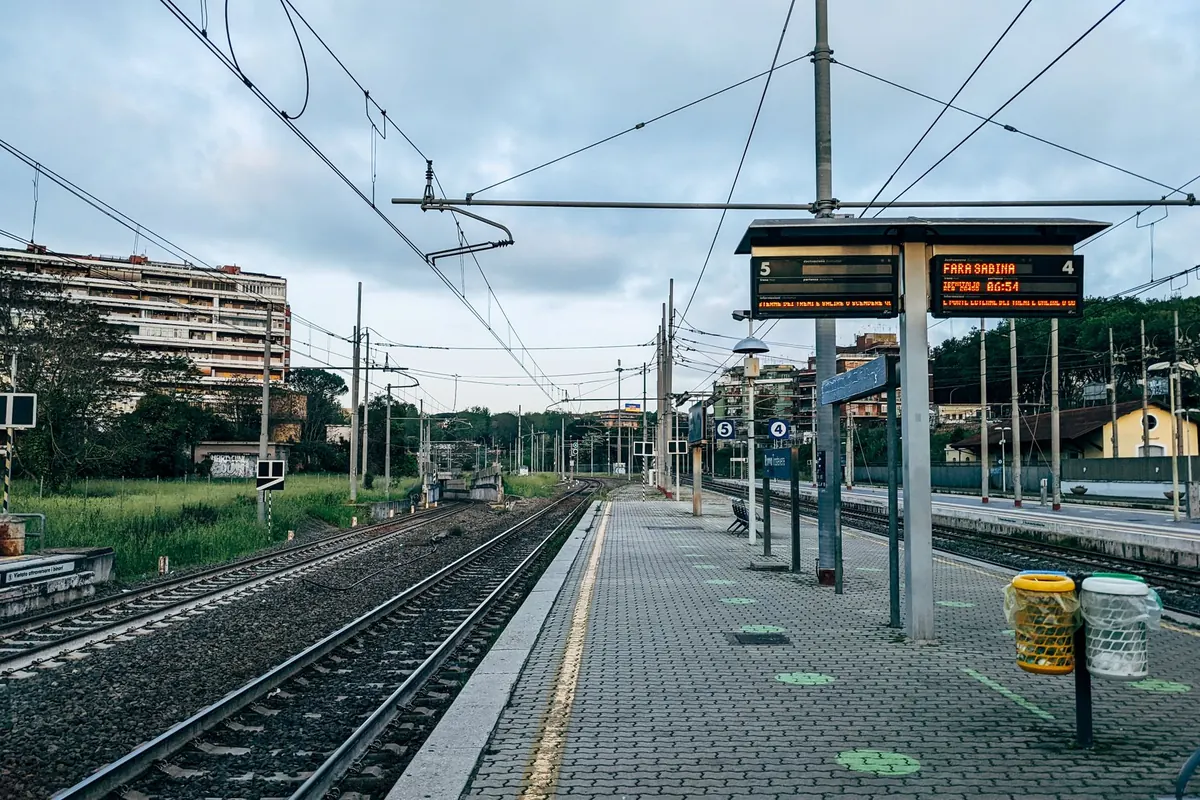
Arrive at major stations twenty to thirty minutes before a high-speed departure. For regional trains, ten minutes is often enough, but do not cut it fine if you need to buy a ticket or find a platform. In Italy, platform numbers can appear close to departure, so watch the boards and listen for announcements.
Tickets, Platforms and Local Transport
- High-speed trains usually come with a seat reservation included in the ticket. Travel on the train and departure you booked unless your ticket allows changes.
- Regional trains are slower and cheaper. If you buy a paper ticket, validate it in the stamping machine before boarding. Digital tickets usually include instructions in the app; follow them.
- City buses and metros often sell tickets at machines, tabacchi and official apps. Validate paper tickets on first use and keep them until the end of the ride.
- Contactless cards work on some city transport systems, but not everywhere. Check locally rather than assuming.
- Venice vaporetti are part of the transport network, not a sightseeing cruise. Validate your ticket or pass before boarding and expect crowded boats at peak times.
A Final Practical Checklist
Before you leave, confirm the exact station names for each leg. Rome has multiple stations; Venice’s Santa Lucia is the one on the island. Check that your accommodation is reachable on foot from the station with your luggage, and keep a offline map of the first walk. Book the train legs you care about most, leave the rest flexible, and plan one unscheduled afternoon. That is usually the part of Italy you remember longest.
Photo: Markus Winkler / Pexels
Related posts
More stories you’ll love reading